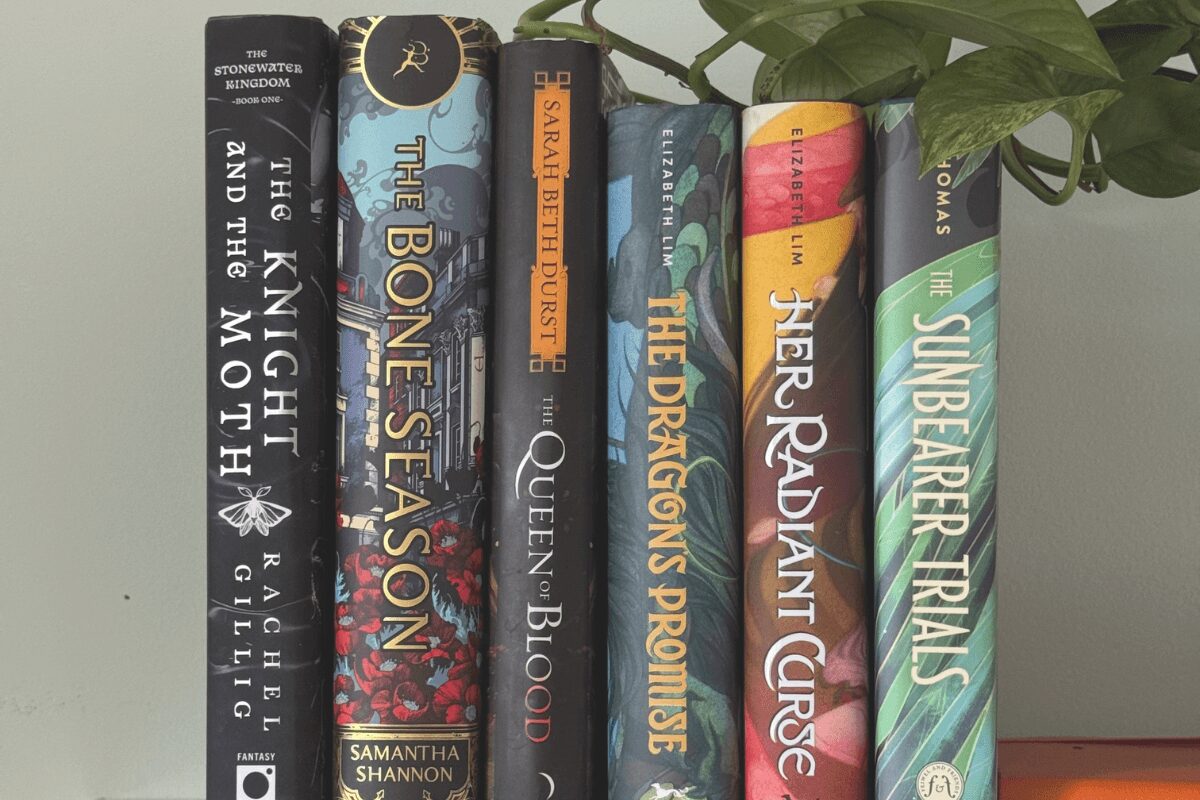
If you love reading, keeping a reading journal is one of the best ways to make your reading experience that much more enjoyable. It turns every book you pick up into something you can reflect on, remember, and truly connect with long after you’ve finished the last page.
The best part? There’s no single “right” way to do it. A reading journal can be as simple or as creative as you want, whether you prefer minimal pages or detailed, decorative spreads.
This post contains affiliate links. As an Amazon Associate, I earn from qualifying purchases. I may also earn a commission from other links at no extra cost to you. Read my full disclaimer here. Thank you for supporting the blog!
A Guide to Starting a Reading Journal
Let’s break down, step by step, why keeping a reading journal is worth it, the essential materials needed, my favorite spread ideas, and where to begin.
Why I Love My Reading Journal
- Track reading progress: Track the books you’ve read, days you read, and the number of pages you read every month.
- Record favorite quotes and thoughts: Write down your favorite thoughts, quotes, characters, or scenes.
- Increase reading motivation: Watching your journal grow can encourage you to keep reading.
- Improve comprehension: Writing down your thoughts and reactions can help you remember important details.
- Track reading tastes: Notice which genres, authors, or tropes you enjoy the most over time.
- Achieve goals: A reading journal can help you finish all the series you’re in the middle of or getting through your TBR list.
What You Need To Get Started
Traditional notebooks or bullet journals add a personal, creative touch to tracking your reading. Choosing one that fits your habits and needs makes setting it up much easier and more enjoyable. Here are some considerations and materials to help you get started:
Essential Materials
All you really need to get started is a good pen and a journal. Journals come in four main types: dotted, graph, lined, and blank. My top choice are dotted journals because they’re so flexible and easy to customize. Here are some features I look for when choosing a journal:
- Numbered pages: Makes it easy to track templates in the index section.
- Pen loop: lets me carry both my journal and pen wherever I go.
- A back pocket: Perfect for storing book cover pictures so I can quickly add them to my book review section when I finish a book.
Optional Materials
You can keep your journal as simple and minimal if that is what you want or you can use additional materials if you want to get creative while designing your pages. Your journal can also follow a theme such as, romance, fantasy, or vintage. Here are some extra materials I like to use to make mine more personal:
- Highlighters or colored pens
- Tape runner
- Stencils
- Stickers and washi tape
- Construction and scrapbooking paper
10 Reading Journal Ideas
If you scroll through Pinterest you’ll find hundreds of templates for your reading journal. Swipe through the 10 examples below to see each spread in action. If you want more ideas, I’ve compiled my favorite spreads in this post: 25+ Reading Journal Ideas, if you’re interested.
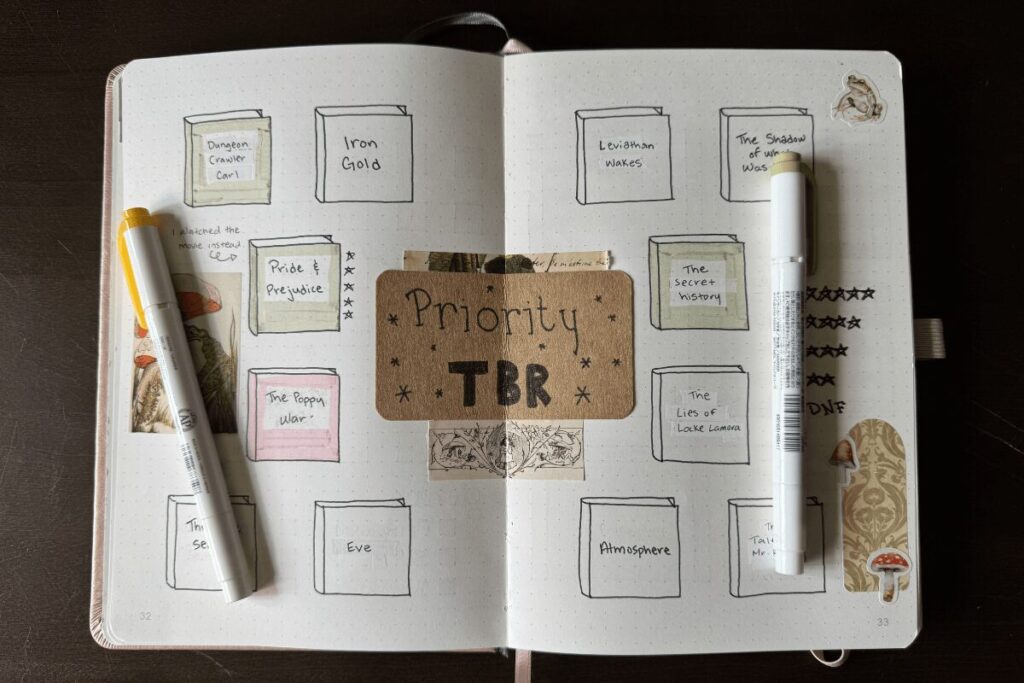
Priority TBR
Keep track of the books you really want to read next. I recommend keeping this list short (e.g. top 10).
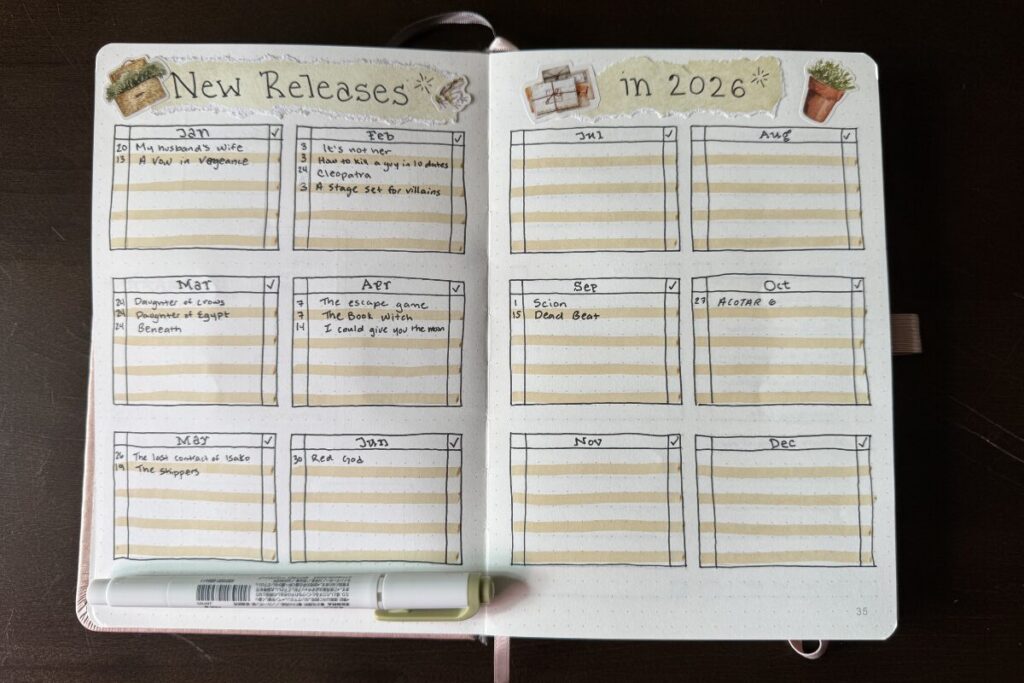
New Releases
Note upcoming books you’re excited for so you never miss a release from your favorite authors or an upcoming book in your favorite series.
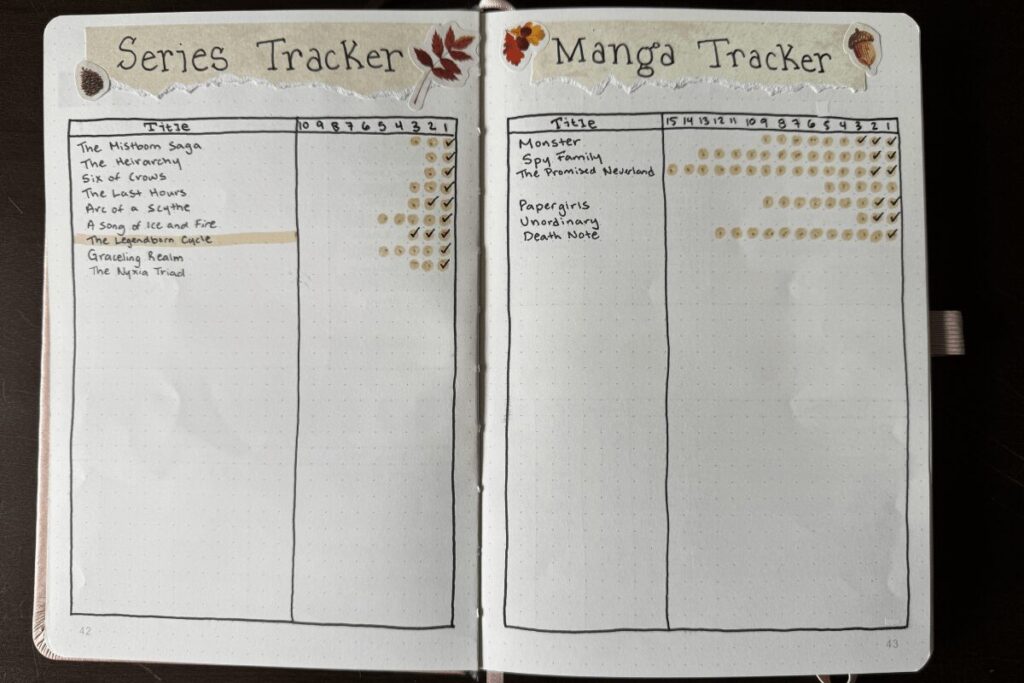
Series Tracker
Keep tabs on series you’re reading, which books you’ve finished, and what’s next.
Book Goals
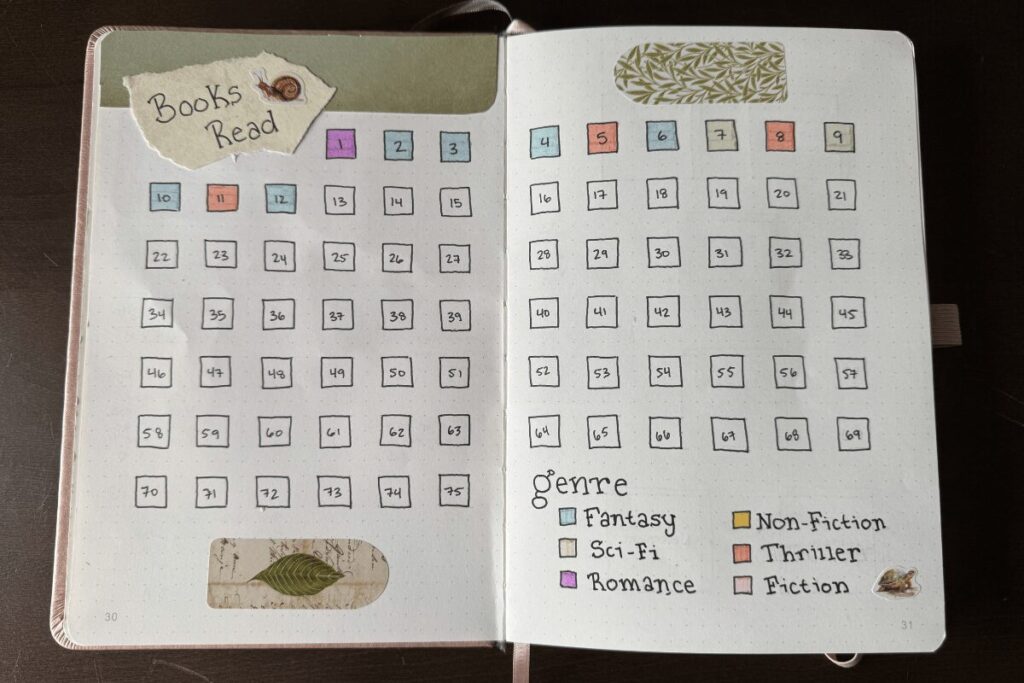
Decide the number of books you want to read this year and colour in the boxes whenever you finish a new book. You can also create a coloring key, like I have, to show the genres you’ve read.
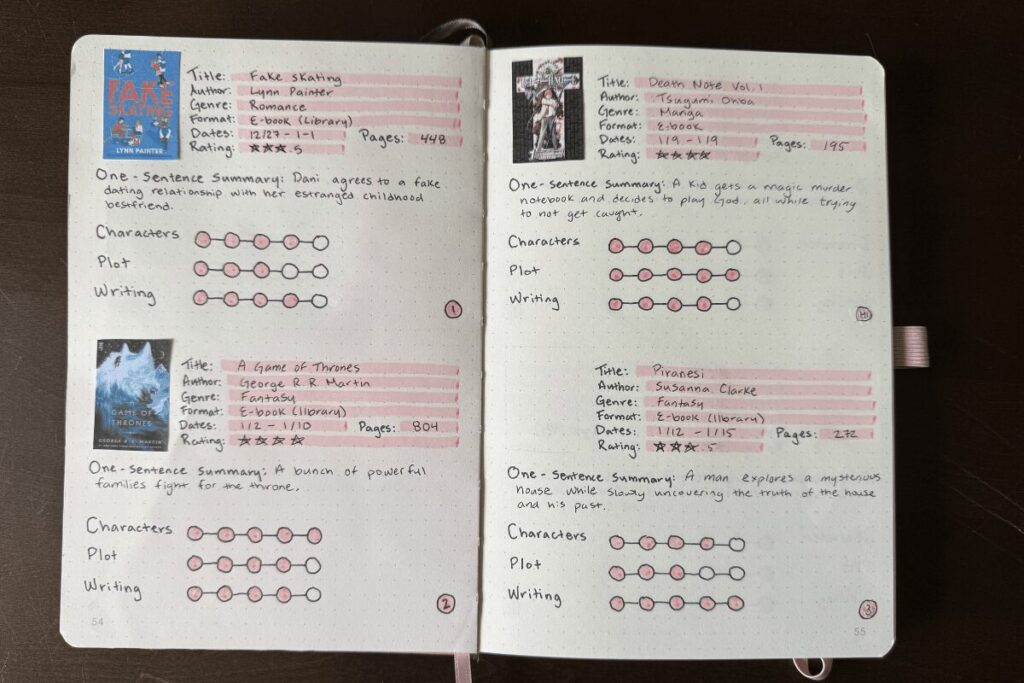
Book Reviews
You can either write down a mini or a long review. Include things like ratings, favorite quotes, and thoughts.
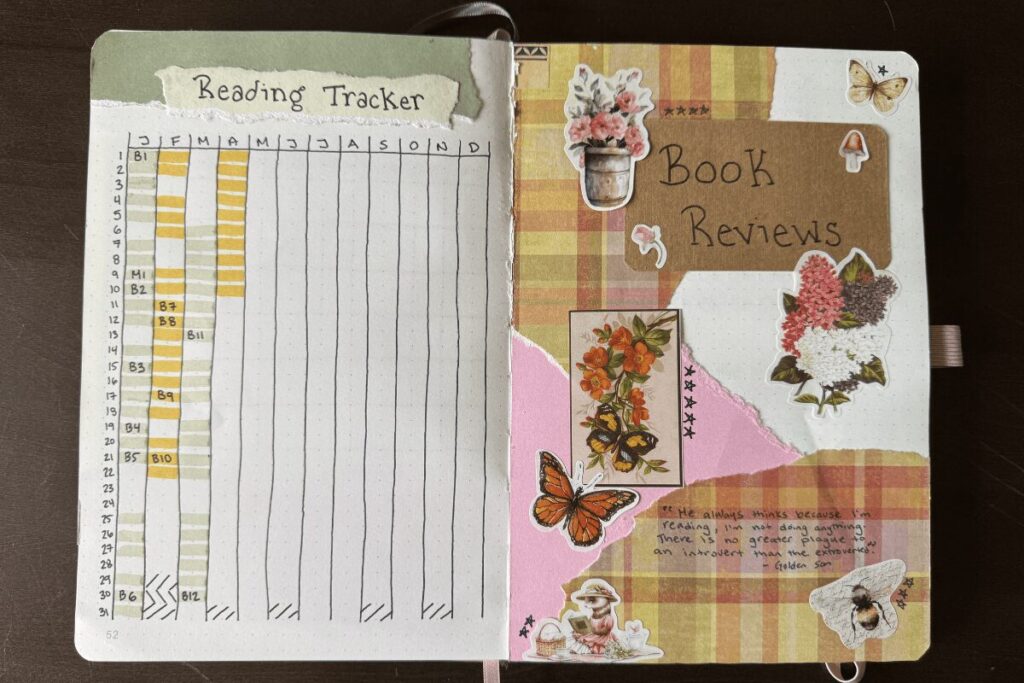
Daily Reading Tracker
Record which days you read and what days you finish your books.
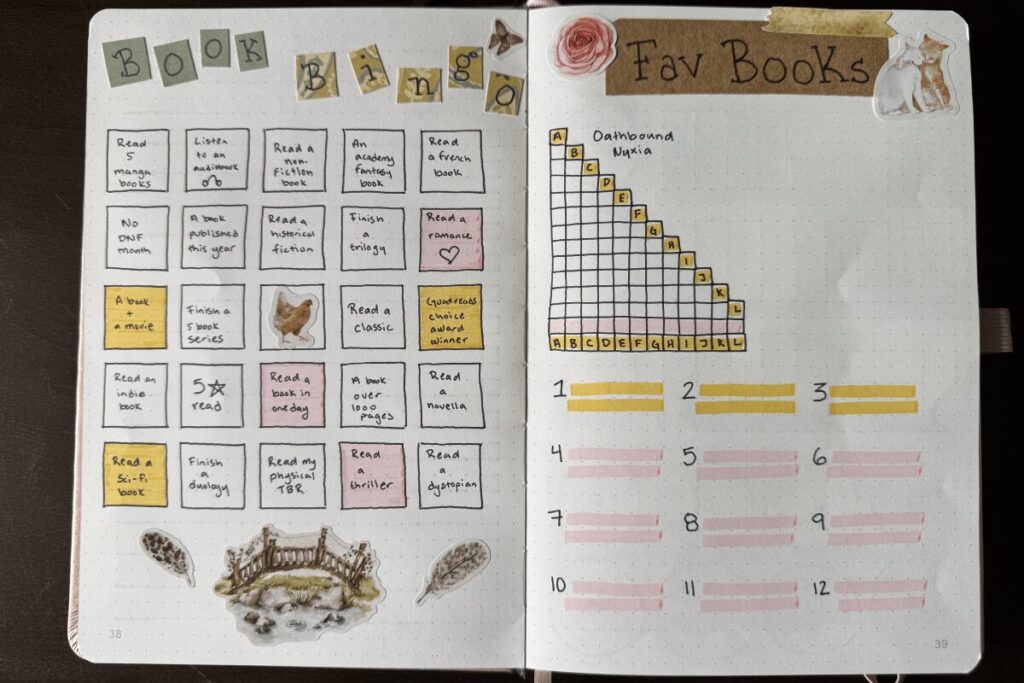
Book Challenges
Track fun challenges (e.g., book bingo, a-z list) to push yourself, try new genres, or complete themed prompts.
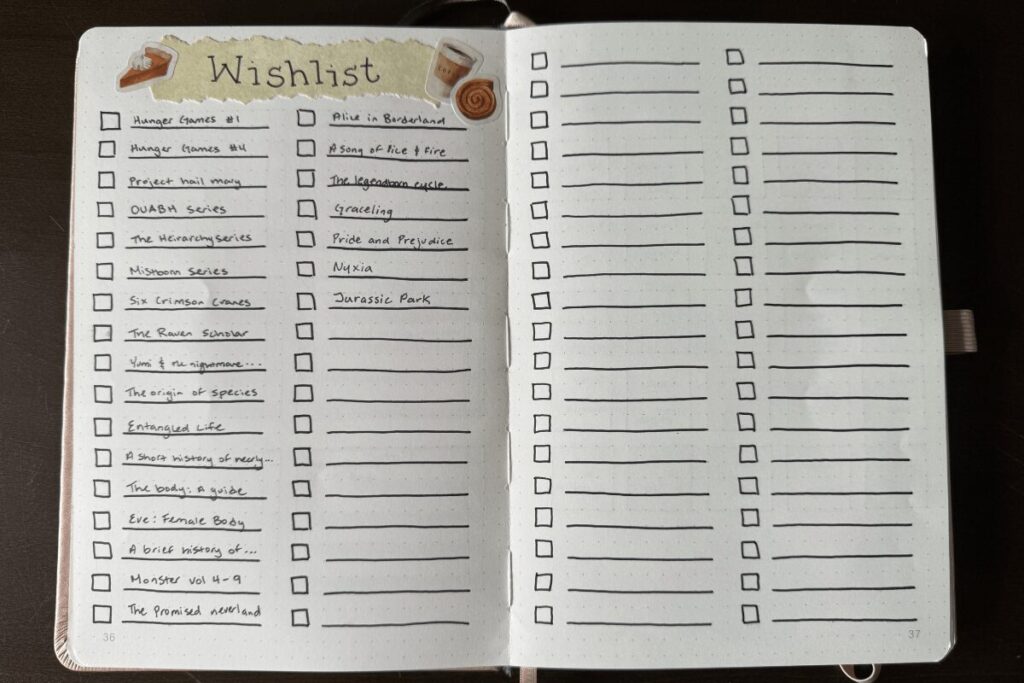
Book Wishlist
Keep a running list of all the books you want to buy in the future.
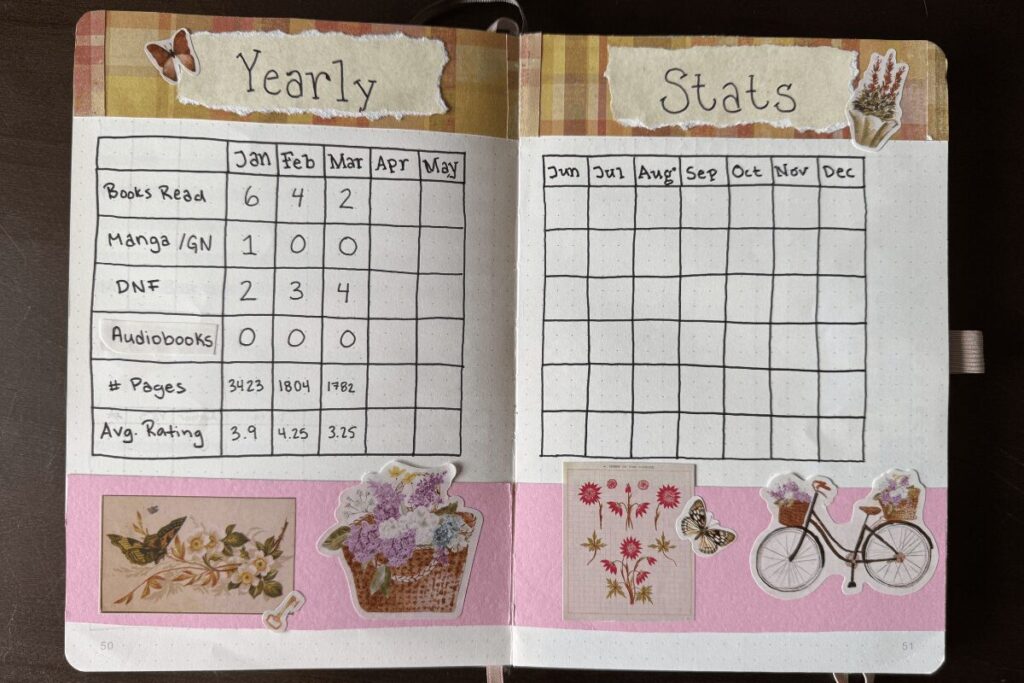
Monthly Reading Stats.
Keep track of all your important monthly reading stats. (e.g. the number of books reads, books you didn’t finish, audiobooks you listened to, the number of pages read, and your avg. star rating).
Favorite Book Ranking
Rank your favorite books to see which books truly stand out over time.
Getting started
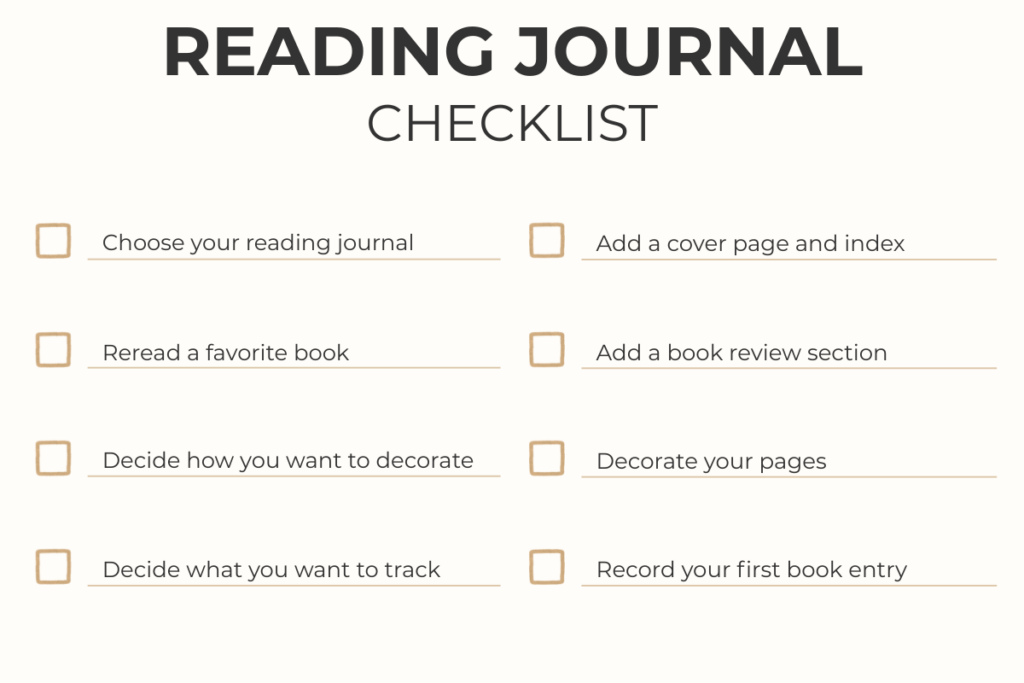
Now that we’ve gone through the basics of starting a reading journal, let’s talk about filling out those first few pages. It can feel a little daunting at first, but don’t overthink it. There isn’t a right or wrong way to create a reading journal, so have fun with it and make it your own. Here’s a simple checklist to help you get started from start to finish:
- Gather your materials: Pick any journal you like, along with the pens, markers, stickers, or other supplies you want to use.
- Figure out a theme: Decide how you want your journal to look. Do you prefer a minimal style, or do you want something highly decorated with a romance, fantasy, or vintage theme?
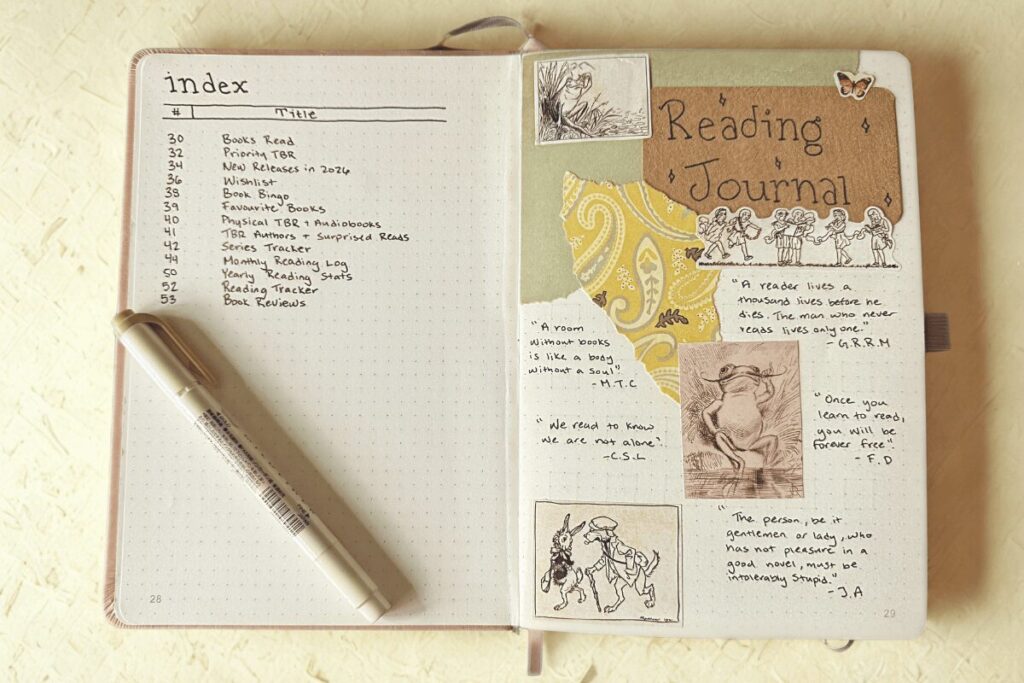
- Title your page: Add a title such as My Reading Journal – 2026. I like to decorate mine with stickers and a few of my favourite book quotes.
- Add an Index (optional): An index isn’t necessary, but it can make it much easier to find specific spreads as your reading journal grows.
- Decide what you want to track: Think about why you want to start a reading journal and which spreads will be the most useful for you. If you’re just getting started, these are the ones I recommend:
- Book goals: Set a reading goal for the year and keep track of the books you’ve finished. Seeing your progress can help you stay motivated.
- Priority list: Create a list of the books you’re most excited to read this year.
- Monthly Spreads: Set up a page for each month to track your reading, favourite books, or reading statistics.
- Book Reviews: Dedicate space to write your thoughts after each book you finish. This can be as short or as detailed as you like.
- Decorate: Add color-Add colour coding, stickers, washi tape, or scrapbook paper to make your journal feel personal.
- Start filling it out: Read your first book and begin recording your progress in your journal.
- Stay Consistent: Set aside a few minutes each day or week to update your reading journal. Focus on consistency rather than perfection, and remember that your journal can always evolve as your reading habits change.
Extra Helpful Tips
- Use Social media to get journal inspiration.
- Remember this journal is for you and you only, there is no need to make it look perfect or look like everyone else’s. Don’t get caught up in being performative. The most important this is that it works for you and makes reading fun.
- Consider sharing favorite entries with friends or your reading community for extra motivation.
- You can either make all your templates beforehand or create as you go, depending on your preference.
- Download or purchase premade templates online and paste them into your reading journal.
Start Your Journal Today!
Starting a reading journal doesn’t have to be complicated. Whether you keep it simple with just a few essential spreads or enjoy decorating every page, the most important thing is creating a journal that works for you.
Remember, your reading journal will naturally grow and change over time. You can always add new spreads, experiment with different layouts, or remove pages you no longer use.
If you’re looking for even more inspiration, be sure to check out my collection of 25+ Reading Journal Spread Ideas, where you’ll find plenty of creative layouts and trackers to add to your journal. And if you’d rather skip drawing everything by hand, you can also browse my Printable Reading Journal Templates to help you get started even faster.
Now grab your favourite journal, pick your first spread, and start your reading journal today!